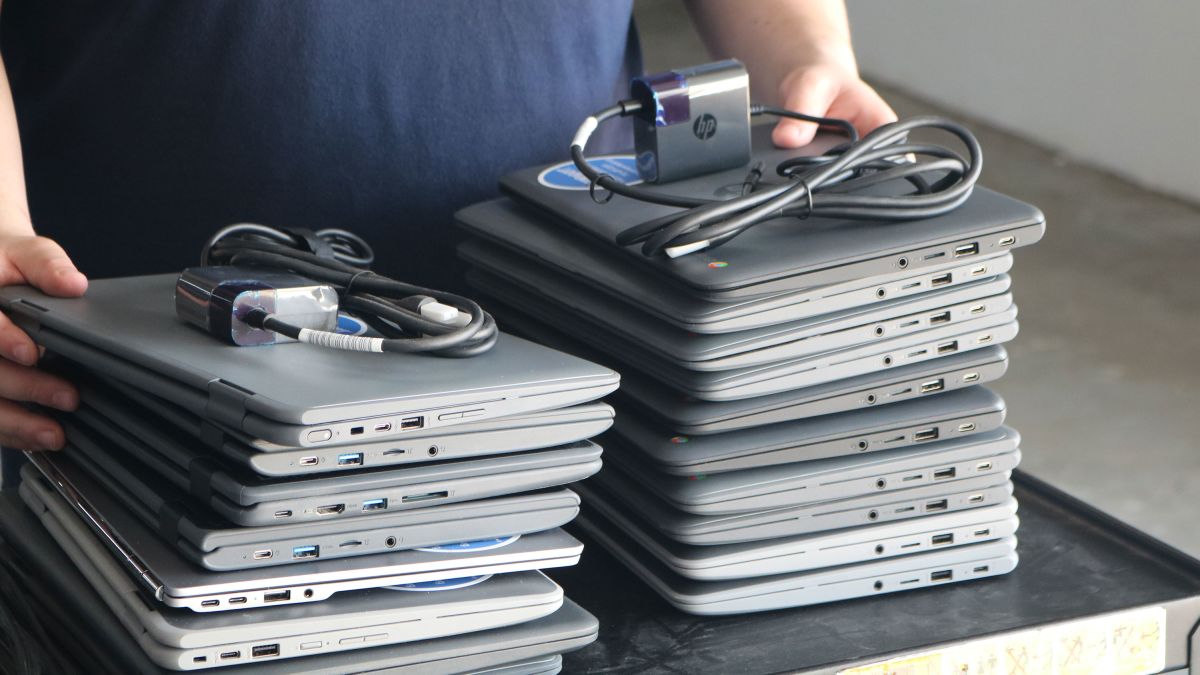
What are the environmental options for recycling old laptops? Safely recycle them, support sustainability and contribute to a greener future.
Goodbye to slow laptops
We’ve all been in this situation – our laptop, super fast at first, starts running slow. Not fun! We try an upgrade, but that doesn’t help either. That leaves the last possible option – recycling. It’s like giving your old friend a new job and doing something good for the planet.
The life cycle of a laptop: from cradle to grave
Your laptop has a history, starting from the moment it was carefully crafted in a manufacturing facility. But as with all stories, there comes a point when the protagonist’s role comes to an end, and in the case of laptops, that’s retirement. The average lifespan of a laptop is about 3-5 years before it is declared “obsolete”.
The environmental impact of e-waste
When laptops are retired, they often end up in the e-waste pile. It’s not just a landfill, it’s a ticking environmental time bomb. Laptops, like other electronic devices, contain hazardous materials like lead, mercury and cadmium. When disposed of improperly, these materials can seep into soil and water, posing serious threats to ecosystems and human health.
Why is laptop recycling important?
Reducing e-waste
The disposal of laptops in landfills contributes significantly to the ever-growing e-waste problem. Laptop recycling is a lifeline offering a way to reduce the impact of e-waste on the environment. By choosing to recycle, you not only free up space in landfills, but also prevent harmful substances from leaking into the environment.
Resource conservation
Laptops are a treasure trove of valuable resources, from precious metals to reusable materials like plastic and glass. Recycling laptops allows the recovery of these materials, reducing the need to mine and manufacture new components. This in turn conserves natural resources and reduces the energy needed to produce them.
How exactly do we recycle laptops?
Collection and sorting
The first step in the recycling journey is collection. Many electronics retailers and recycling centers offer collection services. Once collected, laptops are sorted according to their condition.
Data deletion
Before recycling, it is extremely important to make sure that all personal data has been deleted from the laptop. Our recycling center has a secure data destruction process to protect your privacy.
Disassembly and sorting
Once the data is deleted, the laptops are disassembled. The components are divided into categories such as metal, plastic and glass. This process ensures that each material can be recycled efficiently.
Recovery of materials
After separation, the individual materials are sent for recycling. Metals are melted, plastics are processed and glass is crushed. This step breathes new life into these materials, ready for use in the manufacture of new products.
Closing the loop: buying recycled electronics
Laptop recycling isn’t just about saying goodbye to your old gadget – it’s also about adopting the next generation of sustainable technology. Many manufacturers are now using recycled materials in the production of new electronics. By choosing products made from recycled materials, you are actively supporting the concept of a circular economy.
Conclusion: a greener future
In the big picture of the electronics industry, recycling laptops is a small but impactful act that collectively contributes to a healthier planet. So the next time you say goodbye to your trusty laptop (or tablet and phone), remember that its journey doesn’t end at the landfill – it’s a stepping stone to a greener tomorrow. Laptop recycling isn’t just a trend; it’s a responsibility we owe to the environment and future generations. Let’s make old laptops part of a sustainable cycle – one where technology and ecology go hand in hand.